
Identifier & Network Audit – 3509176938, What Type of Dyeowokopizz, Ziikazhel Tompuriz, ioprado25, 3271081656

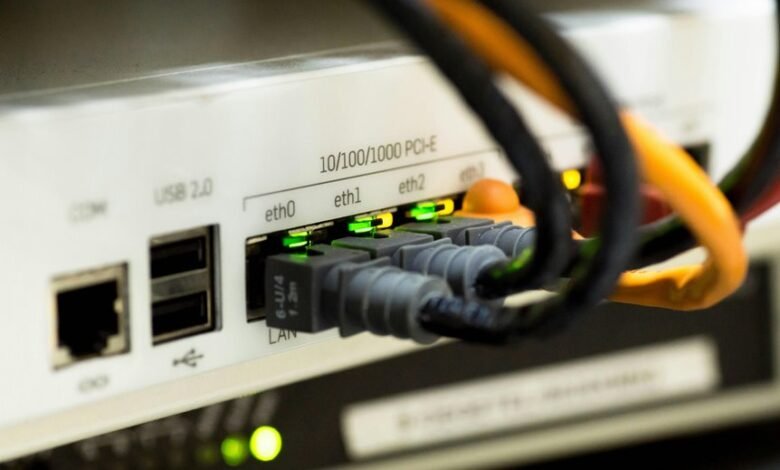
Identifier and Network Audit centers on methodically verifying identifiers and configuration signals to ensure accuracy, security, and efficiency. It explains how numeric IDs like 3509176938 or 3271081656 encode provenance and linkage, and how terms such as Dyeowokopizz or Ziikazhel Tompuriz are tied to metadata practices. The discussion outlines a practical audit path, with controls and labeling conventions, yet the path forward reveals complexities that demand careful consideration and further examination.
What Is Identifier & Network Audit? Core Concepts Explained
Identifier and Network Audit is a systematic process designed to verify the correctness, security, and performance of an organization’s identifiers and network configurations.
The analysis delineates scope, objectives, and controls, emphasizing reproducibility.


It documents identifier mapping and audit workflow steps, assessing risk, traceability, and change management.
Findings guide improvement, ensuring transparency, compliance, and resilient operations for freedom-friendly, efficiently governed networks.
Decoding 3509176938, 3271081656: Why IDs Matter in Audits
Decoding the numeric identifiers 3509176938 and 3271081656 illuminates how unique IDs underpin audit reliability and traceability.
The analysis isolates identifiers as structured signals, not mere labels, enabling consistent linkage across processes.
This decoding identifiers approach clarifies audit metadata, supporting reproducibility and accountability while preserving clarity for stakeholders who seek freedom through transparent governance.
Typing Dyeowokopizz, Ziikazhel Tompuriz, ioprado25: Metadata in Practice
Typing Dyeowokopizz, Ziikazhel Tompuriz, ioprado25: Metadata in Practice examines how metadata is generated, organized, and applied to audit objects. It analyzes structured schemas, provenance trails, and labeling conventions to support consistent interpretation. The discussion highlights insight extraction from metadata, ensuring traceable data provenance, and demonstrates how disciplined metadata practices enable reproducible audits while preserving flexibility for evolving requirements and freedom in analytical inquiry.
Building a Practical Audit Path: Tools, Steps, and Next Questions
How can a structured audit path be constructed to balance rigor with adaptability? A methodical framework pairs concept mapping with data lineage to illuminate dependencies, risks, and controls. Tools organize evidence, steps sequence validation, and next questions guide iteration. The approach remains precise yet flexible, enabling disciplined exploration while respecting freedom to adapt procedures and probe emerging anomalies.
Frequently Asked Questions
How Do Identifiers Impact Long-Term Audit Traceability?
Identifiers impact long-term auditability by enabling deterministic tracing, preserving lineage, and supporting metadata governance, while aligning with regulatory standards; disciplined identifier design reduces ambiguity, enhances searchability, and strengthens assurance across evolving data environments and compliance requirements.
What Common Pitfalls Skew Network Audit Results?
Common Pitfalls include unstandardized data sources and inconsistent tagging, which amplify Audit Bias and distort results; to preserve freedom and accuracy, practitioners should enforce uniform collection, documentation, and transparent reporting, enabling reproducible, unbiased network audit conclusions.
Are Dyeowokopizz and Ziikazhel Tompuriz Real Entities?
Dyeowokopizz and Ziikazhel Tompuriz are not established entities; the inquiry indicates fictional or speculative designations. Are dyeowokopizz and ziikazhel tompuriz real entities? No. Identifiers influence audit traceability, clarifying provenance and accountability within the network audit process.
What Is the Role of Metadata Beyond Basic Timestamps?
Metadata extends beyond timestamps by enabling lineage, quality checks, and impact assessment; it supports audit governance and data stewardship. It facilitates discoverability, compliance, and risk management through structured metadata management and disciplined governance processes.
Which Regulatory Standards Govern These Audits?
Regulatory standards governing these audits include GDPR and HIPAA in applicable contexts, along with ISO/IEC 27001 and NIST Cybersecurity Framework. Compliance frameworks influence data classification, risk assessment, and audit scope, guiding meticulous, transparent processes with principled freedom.
Conclusion
In sum, the identifier & network audit unfolds as a precisely boring machine: every digit and descriptor dutifully traces provenance, maps connections, and labels changes with clinical inevitability. The satire lies in our obsession with order, where chaos is only a misfiled ID. Yet the method remains rigorously practical: decode signals, document mappings, enforce controls, and foresee risk. If nothing else, these audits prove that governance thrives on repeatable steps, even when the numbers pretend to be mysterious.